D2 vs 1.4116: which steel matches your week
Edge retention, corrosion behaviour, sharpening effort. One is a tool steel that resists wear; the other is stainless that forgives neglect.
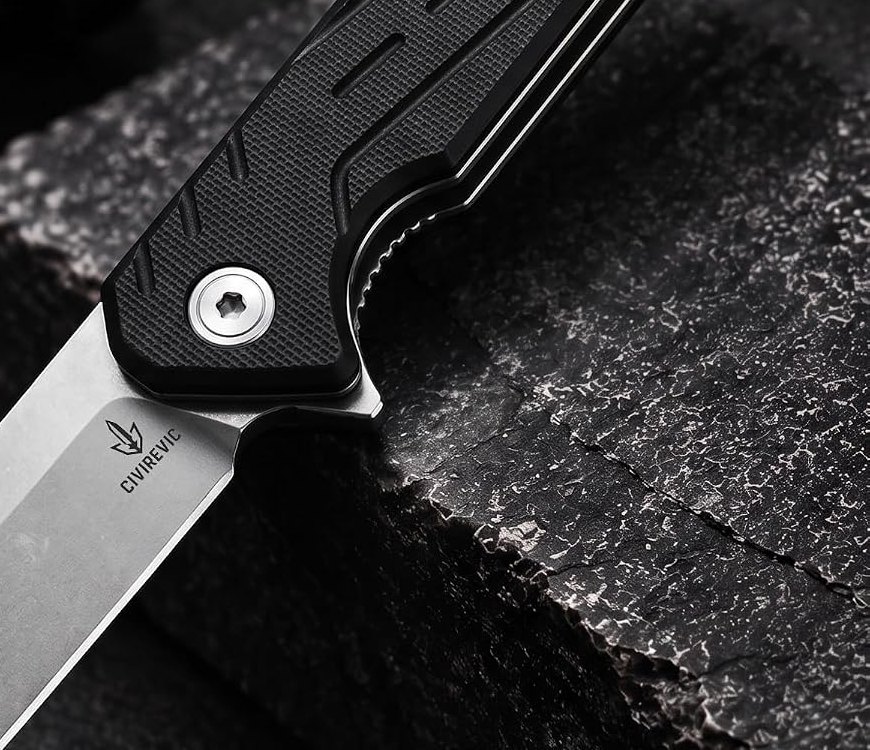
We build in two steels. Not because one is better, but because they fail in opposite directions.
D2 — a tool steel that works for a living
D2 is a high-carbon, high-chromium tool steel. It resists wear exceptionally well for the price, which is why it holds a working edge through cardboard, zip ties and packing tape without a touch-up every few days. It is also semi-stainless: chromium content is high, but not high enough to shrug off a wet sheath overnight.
Choose D2 if: you cut hard material daily, you want the edge to last a week of real work, and you accept drying the blade after wet use.
D2 costs you: sharpening effort. It is not a steel you touch up on a coffee mug. Use a diamond stone or a guided system.
1.4116 — stainless that forgives
1.4116 is a German stainless, the kind of steel found in kitchen cutlery for decades. Edge retention is solid rather than exceptional, but corrosion resistance is genuinely good and it touches up on a simple stone in minutes.
Choose 1.4116 if: your knife lives in a pocket, gets rained on, gets left in a bag, and you would rather spend two minutes sharpening than thirty maintaining.
1.4116 costs you: edge life under heavy abrasive work. Cardboard dulls it faster than D2.
The honest summary
If your knife is a tool you maintain, D2 rewards you. If your knife is a thing you carry and occasionally abuse, 1.4116 is the one that will still be in your pocket in three years.
Neither choice is wrong. Buying the wrong one for your habits is.
Got one of these blades? Test the next one.
We send new models to owners before they list. Leave your email and what you carry.